


Fall Roof Inspection Checklist: 10 Things Mississauga & GTA Homeowners Should Check Before Winter
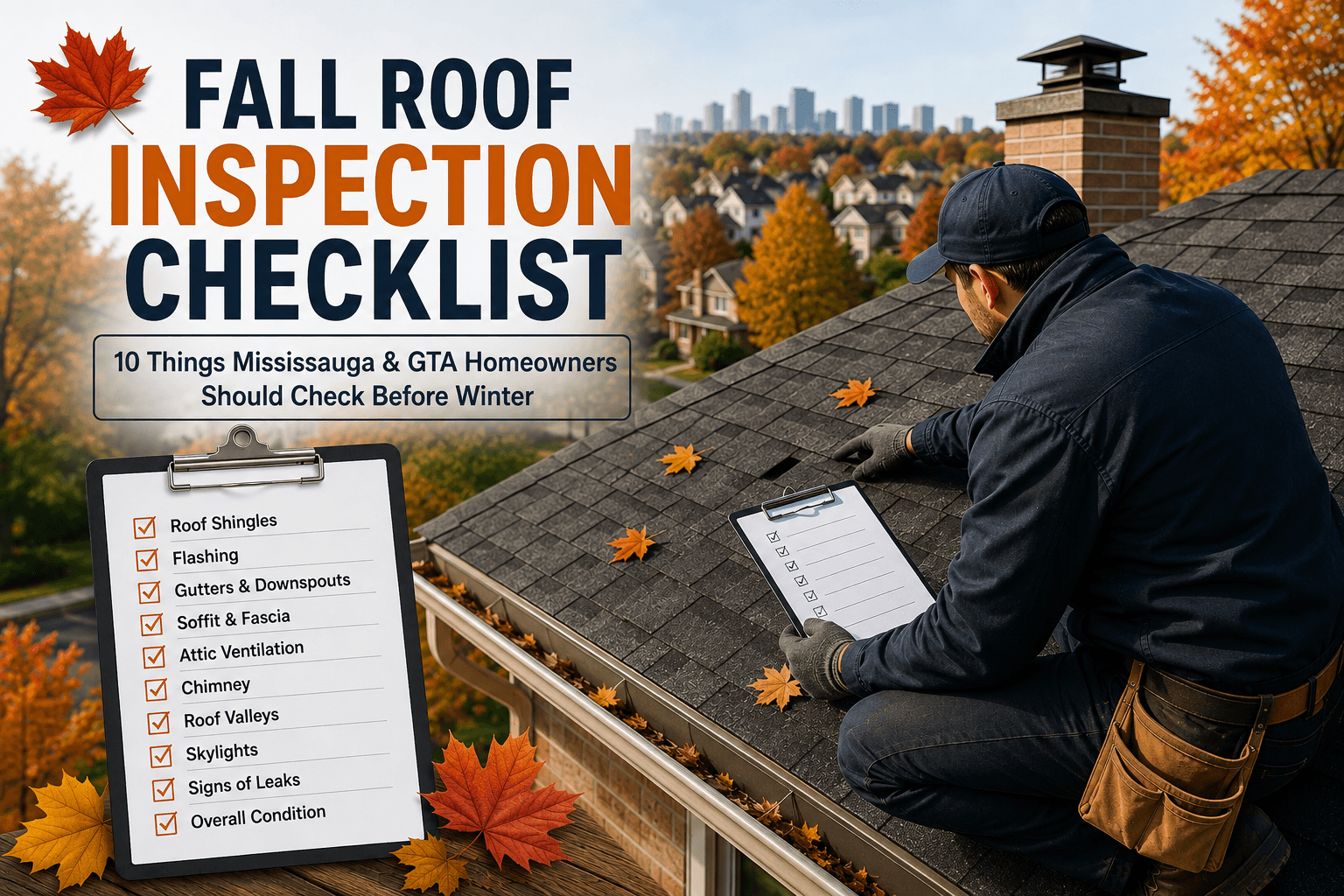
Before the snow flies and temperatures drop across the GTA, fall is the best time to give your roof a thorough once-over. A proper roof inspection in September or October can catch small issues before winter turns them into leaks, ice dams, or costly structural damage. Whether you tackle it yourself or bring in a professional, this checklist covers everything Mississauga and GTA homeowners should look at before the cold weather sets in.
Below, we walk through the 10 most important areas to check, why they matter, and when it’s time to call a roofing contractor in Mississauga homeowners trust to handle the rest.
Why Fall Roof Maintenance Matters in the GTA
Mississauga and the surrounding GTA see a wide swing between warm, humid summers and freezing, snow-heavy winters. That freeze-thaw cycle is one of the toughest things a roof can endure—water seeps into small cracks, freezes, expands, and gradually worsens the damage. Completing your roof maintenance before winter gives you a chance to fix minor wear while it’s still cheap and easy to repair, rather than discovering a leak in the middle of a January snowstorm.
1. Inspect Shingles for Damage or Wear
Start with a visual check of your shingles, either from the ground with binoculars or safely from a ladder. Summer heat and UV exposure can leave shingles brittle, cracked, or curling at the edges as fall approaches.
What to Look For
- Cracked, curling, or blistered shingles
- Missing or loose shingles, especially after summer storms
- Bald spots where granules have worn away
- Dark streaks or discoloration indicating moisture or algae growth
2. Check Flashing Around Chimneys, Vents, and Skylights
Flashing is the metal barrier that seals joints and penetrations in your roof — around chimneys, vent pipes, and skylights. It’s one of the most common places for leaks to start, especially once ice and snow settle in.
Signs of Flashing Problems
- Rust, corrosion, or visible gaps in the metal
- Cracked or dried-out caulking or sealant
- Flashing that has lifted or separated from the roof surface
- Water stains on the ceiling near chimneys or vents inside the home
3. Clear and Inspect Gutters and Downspouts
Clogged gutters are one of the leading causes of winter roof damage in the GTA. When leaves and debris block water flow, it can back up under shingles or freeze into ice dams along the roofline.
Gutter Checklist
- Remove leaves, twigs, and debris from gutters and downspouts
- Check for sagging sections or loose brackets
- Confirm downspouts direct water at least several feet away from the foundation
- Look for granules collecting in the gutter, which can signal shingle wear
4. Look for Signs of Ice Dam Risk
Ice dams form when heat escaping from the attic melts snow on the roof, which then refreezes at the colder eaves. Over time, trapped water can work its way under shingles and into the home.
Warning Signs
- Icicles forming along the eaves after past snowfalls
- Uneven snow melt patterns on the roof
- Water stains near the roofline inside the attic
- Poor attic insulation or ventilation
5. Check Attic Insulation and Ventilation
A well-insulated, properly ventilated attic keeps your roof deck at a more consistent temperature, which reduces the risk of ice dams and helps your roof last longer. Fall is an ideal time to check this before heating season begins.
What to Check
- Insulation depth and any areas that have settled or shifted
- Blocked soffit vents that restrict airflow
- Signs of moisture, mould, or musty odours in the attic
- Daylight visible through the roof boards (a sign of gaps or damage)
6. Inspect Roof Valleys and Seams
Roof valleys — where two roof slopes meet — handle a large volume of water runoff and are more prone to wear than flat sections of roof. Any weakness here can lead to leaks once heavy rain or melting snow moves through.
What to Look For
- Cracked or worn shingles along the valley lines
- Rust or gaps in valley flashing
- Debris buildup that traps moisture against the roof surface
7. Examine Fascia and Soffit Boards
Fascia and soffit boards support your gutters and ventilate your attic. Moisture damage here often goes unnoticed until it’s already caused rot or attracted pests.
Signs of Trouble
- Peeling paint or soft, spongy wood
- Visible rot, warping, or gaps
- Signs of pest activity, such as small holes or nests
8. Check for Moss, Algae, or Debris Buildup
Shaded areas of the roof, especially under overhanging trees, are prone to moss and algae growth. These trap moisture against the shingles and can accelerate wear over time.
Maintenance Tips
- Gently remove moss and debris without damaging shingles
- Trim back overhanging branches to improve airflow and sunlight
- Avoid pressure washing, which can strip granules from shingles
9. Inspect the Attic for Leaks or Water Stains
Sometimes the clearest sign of a roofing issue isn’t visible from outside at all — it’s inside the attic. A fall inspection is a great time to check for problems before winter moisture makes them worse.
What to Check
- Water stains or discoloration on the underside of the roof deck
- Damp insulation or musty smells
- Visible daylight coming through roof boards
- Sagging areas in the roof deck
10. Review the Overall Age and Condition of the Roof
Most asphalt shingle roofs in the GTA last between 15 and 25 years, depending on material quality, ventilation, and maintenance history. If your roof is approaching or past this range, a fall inspection is especially important to determine whether repairs will get you through winter or whether to plan a replacement for spring.
- When to Call a Professional Roofing Contractor
Walking your yard with binoculars can catch obvious problems, but many roofing issues — like weakened flashing, subtle shingle damage, or attic ventilation gaps — are best identified by a trained eye. Climbing onto a roof also carries real safety risks, especially on steep or wet surfaces.
If you notice any of the warning signs above, or if it’s been a few years since your last inspection, our team offers thorough roof inspection Mississauga that GTA homeowners rely on to catch problems early. As an experienced roofing contractor Mississauga residents trust, we can assess your roof’s condition and recommend the right next steps before winter arrives.
Frequently Asked Questions
When is the best time for a fall roof inspection in the GTA?
Early-to-mid fall, typically September or October, is ideal. This gives enough time to schedule repairs before temperatures drop and makes roof work safer and more comfortable for a contractor.
How often should I have my roof professionally inspected?
Most experts recommend a professional roof inspection GTA homeowners can rely on at least once a year, ideally in the fall, plus after any major storm or high-wind event.
Can I do a roof inspection myself, or do I need a professional?
You can safely check visible signs from the ground or check your attic for leaks yourself. However, walking on the roof or diagnosing flashing, ventilation, or structural issues is best left to a professional roofing contractor Mississauga homeowners can trust for an accurate assessment.
What are the biggest roof risks during a GTA winter?
Ice dams, heavy snow load, and freeze-thaw cycles are the most common winter risks. These can worsen existing weak points, such as damaged shingles, poor flashing, or inadequate attic insulation.
How do I know if my roof needs repairs or a full replacement?
Age, extent of damage, and the number of previous repairs all factor in. A professional inspection can determine whether targeted repairs will hold through winter or whether full replacement is the more cost-effective long-term option.
Does homeowner’s insurance cover roof damage from winter weather?
Coverage varies by policy and insurer, and often depends on whether the damage was sudden (like a storm) versus gradual wear from lack of maintenance. It’s worth reviewing your policy and documenting your roof’s condition each fall.
What’s the average cost of a roof inspection in Mississauga?
Costs vary depending on roof size, accessibility, and the scope of the inspection. Many roofing contractors offer free or low-cost inspections, especially when paired with a maintenance or repair estimate.
Final Thoughts
A thorough fall roof inspection is one of the most cost-effective things a GTA homeowner can do before winter. Catching small issues now — a loose shingle, a clogged gutter, a gap in flashing — can prevent much bigger and more expensive problems once snow and ice settle in.
If you’d rather leave it to the professionals, contact our team for a complete roof inspection and get your home ready for whatever this winter brings.